How to Set Up Financial Systems for a Small Business
Many small business owners focus heavily on sales, marketing, and growth. But behind every successful company is a strong set of financial systems.
Without proper financial systems, it becomes difficult to track income, manage expenses, understand profitability, or make informed decisions. You may be generating revenue, but without structure, it’s easy for cash flow issues, tax problems, and operational inefficiencies to creep in.
Well-designed financial systems give you visibility into how your business is performing. They allow you to answer critical questions like:
- Are we actually profitable?
- Where is our cash going?
- Which products or services generate the most revenue?
- Can we afford to hire or invest in growth?
For small businesses, putting the right financial systems in place early can prevent costly mistakes and set the foundation for long-term growth.

What Are Financial Systems?
Financial systems are the processes, tools, and controls that help a business manage its finances.
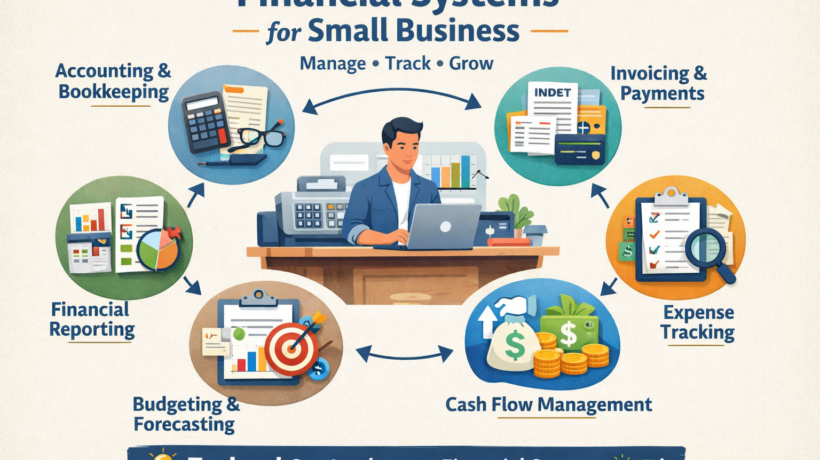
They typically include:
- Accounting software
- Budgeting processes
- Financial reporting
- Cash flow tracking
- Payment and invoicing systems
- Expense management
- Financial forecasting
Together, these elements ensure that money flowing in and out of the business is recorded accurately and analysed effectively.
Think of financial systems as the infrastructure that supports financial decision-making.
Why Small Businesses Need Financial Systems Early
Many founders delay implementing proper financial systems until their business grows. Unfortunately, this often leads to messy records and reactive decision-making.
Here’s why implementing financial systems early matters.
1. Better Cash Flow Management
Cash flow is the lifeblood of a small business. Strong financial systems allow you to track incoming payments, monitor expenses, and forecast future cash needs.
2. Clear Financial Visibility
Without structured financial systems, business owners rely on guesswork. With them, you can quickly understand revenue trends, expenses, and profitability.
3. Easier Tax Compliance
Organised financial systems ensure accurate records for tax filings, reducing the risk of errors, penalties, or audits.
4. Smarter Decision Making
When reliable financial data is available, decisions about hiring, marketing spend, pricing, or expansion become much easier.
Core Financial Systems Every Small Business Should Have
Not every business needs complex financial infrastructure. But a few essential financial systems should exist from day one.
Accounting Financial Systems
Your accounting system records every financial transaction in your business.
This includes:
- Sales revenue
- Expenses
- Assets
- Liabilities
- Payroll
Popular accounting tools for small businesses include platforms like QuickBooks, Xero, and FreshBooks.
A strong accounting financial system ensures that your financial statements—such as your profit and loss statement and balance sheet—are always up to date.
Invoicing and Payment Financial Systems
If your business sends invoices, you need a reliable way to track them.
Invoicing financial systems help you:
- Send professional invoices
- Track outstanding payments
- Accept multiple payment methods
- Automate reminders
Without these financial systems, unpaid invoices can quickly create cash flow problems.
Expense Tracking Financial Systems
Expense tracking is another critical component of your financial systems.
Businesses need to record:
- Office expenses
- Software subscriptions
- Supplier payments
- Travel costs
- Marketing spend
Automated expense tracking financial systems reduce manual data entry and ensure expenses are recorded correctly.
Cash Flow Monitoring Financial Systems
Many profitable businesses still fail because they run out of cash.
Cash flow financial systems allow you to monitor:
- Cash coming into the business
- Upcoming bills and liabilities
- Short-term funding gaps
This visibility helps you avoid liquidity crises and maintain financial stability.
Budgeting Financial Systems
Budgeting financial systems help businesses plan where money should be spent.
A good business budget outlines:
- Expected revenue
- Operating costs
- Marketing investment
- Hiring plans
- Capital expenditures
Comparing actual performance against the budget helps identify areas where the business is overspending or underperforming.
Financial Reporting Systems
Financial reporting financial systems generate reports that summarise business performance.
Key reports include:
- Profit and Loss Statement
- Balance Sheet
- Cash Flow Statement
These reports provide insights into profitability, financial health, and operational efficiency.
Steps to Set Up Financial Systems for a Small Business
Implementing financial systems doesn’t need to be complicated. Following a structured process makes it easier.
Step 1: Open a Dedicated Business Bank Account
Separating personal and business finances is the first step in building proper financial systems.
A business bank account ensures:
- Clear financial records
- Easier accounting
- Simplified tax reporting
Step 2: Choose the Right Accounting Software
Accounting software is the foundation of most financial systems.
Look for tools that offer:
- Automated transaction imports
- Invoicing features
- Expense categorisation
- Financial reporting
Choosing scalable software ensures your financial systems grow with your business.
Step 3: Define Your Chart of Accounts
The chart of accounts categorises all financial transactions.
Examples include:
Revenue categories
- Product sales
- Service income
Expense categories
- Marketing
- Payroll
- Office expenses
Well-structured charts improve the accuracy of your financial systems.
Step 4: Implement Expense and Payment Processes
Your financial systems should define how payments and expenses are handled.
For example:
- How invoices are approved
- Who authorises payments
- How expenses are recorded
- When suppliers are paid
Clear processes reduce errors and improve financial control.
Step 5: Establish Financial Reporting Routines
Effective financial systems require regular reporting.
Most businesses should review financial reports:
- Monthly
- Quarterly
- Annually
These reviews help identify trends, risks, and opportunities.
Common Mistakes When Building Financial Systems
Even well-intentioned businesses make mistakes when implementing financial systems.
Common pitfalls include:
Mixing personal and business finances
This creates confusion and makes accounting much harder.
Ignoring financial reports
Many founders collect data but never review it.
Overcomplicating systems too early
Early-stage businesses need simple and scalable financial systems, not complex enterprise tools.
Waiting too long to get professional support
Financial systems work best when structured correctly from the beginning.
How Tookand Can Help Implement Financial Systems
Setting up financial systems requires more than just installing accounting software. Businesses need the right processes, reporting frameworks, and financial strategy.
This is where Tookand can help.
Tookand works with business owners to design and implement financial systems that provide clarity, control, and actionable insights.
Our approach includes:
- Designing financial structures tailored to your business
- Implementing accounting and reporting systems
- Building dashboards and performance metrics
- Improving financial visibility and decision-making
With the right financial systems, business owners gain confidence in their numbers and make smarter strategic decisions.
Final Thoughts
Strong financial systems are essential for any small business that wants to grow sustainably.
They provide structure, improve visibility, and support better decision-making.
Whether you are just starting out or looking to improve existing processes, investing in well-designed financial systems can transform how your business operates.
And if you need expert support, Tookand can help implement the financial systems that give your business the financial clarity it needs to scale.